Disseminated Sporotrichosis with Cutaneous and Osteoarticular Involvement in an Immunosuppressed Patient: A Case Report
Article Sidebar
Main Article Content
Abstract
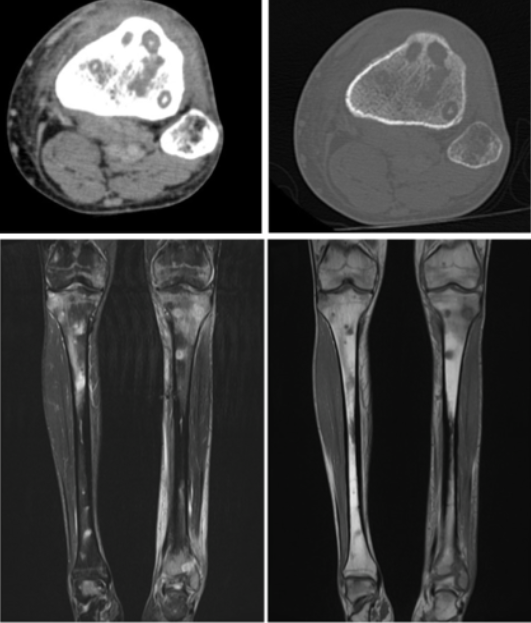
Sporotrichosis is a fungal infection caused by species of the Sporothrix genus, primarily Sporothrix schenckii and Sporothrix brasiliensis, the latter being more virulent and associated with higher transmission rates in Brazil. Infection generally occurs through traumatic inoculation of contaminated soil, plants, or organic matter and may also be transmitted by cats, particularly in cases involving S. brasiliensis. The disease predominantly affects the skin and subcutaneous tissue. We report the case of a young man living with HIV/AIDS who presented with cutaneous lesions and osteoarticular involvement caused by Sporothrix spp., consistent with disseminated sporotrichosis. The patient had a history of contact with cats. The diagnosis was confirmed by skin and bone biopsies, with polymerase chain reaction (PCR) positive for Sporothrix. During treatment, which included antiretroviral therapy, the patient developed immune reconstitution inflammatory syndrome (IRIS) and worsening renal function associated with the use of amphotericin B deoxycholate. Treatment was prolonged, with outpatient follow-up and subsequent therapy with itraconazole. Sporotrichosis is an emerging disease in Brazil, and its variable clinical presentation may delay diagnosis. It should be considered in the differential diagnosis of chronic cutaneous lesions, particularly in immunosuppressed individuals, because of the risk of disseminated disease and osteomyelitis.
Article Details

This work is licensed under a Creative Commons Attribution 4.0 International License.
Authors retain the copyright of their articles and grant the journal the right of first publication under the Creative Commons Attribution (CC BY) license, which allows others to share and adapt the work with proper attribution.
References
BARROS, M. B.; ALMEIDA PAES, R. de; SCHUBACH, A. O. Sporothrix schenckii and sporotrichosis. Clinical Microbiology Reviews, v. 24, n. 4, p. 633–654, 2011. DOI: 10.1128/CMR.00007-11.
CHENG, S. et al. Current situation of sporotrichosis in China. Future Microbiology, v. 19, n. 12, p. 1097–1106, 2024. DOI: 10.1080/17460913.2024.2352283.
MACEDO, P. M. de et al. Development and validation of a new quantitative reverse transcription PCR assay for the diagnosis of human sporotrichosis. Medical Mycology, v. 61, n. 7, p. myad063, 2023. DOI: 10.1093/mmy/myad063.
RAMÍREZ-SOTO, M. C. Extracutaneous sporotrichosis. Clinical Microbiology Reviews, 2025. e0014024. DOI: 10.1128/cmr.00140-24.
RAMOS, V. et al. Bone sporotrichosis: 41 cases from a reference hospital in Rio de Janeiro, Brazil. PLoS Neglected Tropical Diseases, v. 15, n. 3, p. e0009250, 2021. DOI: 10.1371/journal.pntd.0009250.
SENDRASOA, F. A. et al. Epidemiological and clinical aspects of sporotrichosis in patients seen at a reference hospital in Madagascar. PLoS Neglected Tropical Diseases, v. 17, n. 7, p. e0011478, 2023. DOI: 10.1371/journal.pntd.0011478.
SHARMA, R. et al. The clinico-epidemiological characteristics and therapeutic experience of 152 patients with cutaneous sporotrichosis: a 10-year retrospective study from India. International Journal of Dermatology, v. 60, n. 1, p. 99–106, 2021. DOI: 10.1111/ijd.15299.
VERONESI, R.; FOCACCIA, R. Esporotricose. In: VERONESI, R.; FOCACCIA, R. (Ed.). Tratado de infectologia. 5. ed. São Paulo: Atheneu, 2015. p. 1571–1610.
ZHANG, M. et al. Fast diagnosis of sporotrichosis caused by Sporothrix globosa, Sporothrix schenckii, and Sporothrix brasiliensis based on multiplex real-time PCR. PLoS Neglected Tropical Diseases, v. 13, n. 2, p. e0007219, 2019. DOI: 10.1371/journal.pntd.0007219.