Wide Pulse Pressure in an Elderly Patient with Diabetes: A Case Report and Literature Review
Article Sidebar
Main Article Content
Abstract
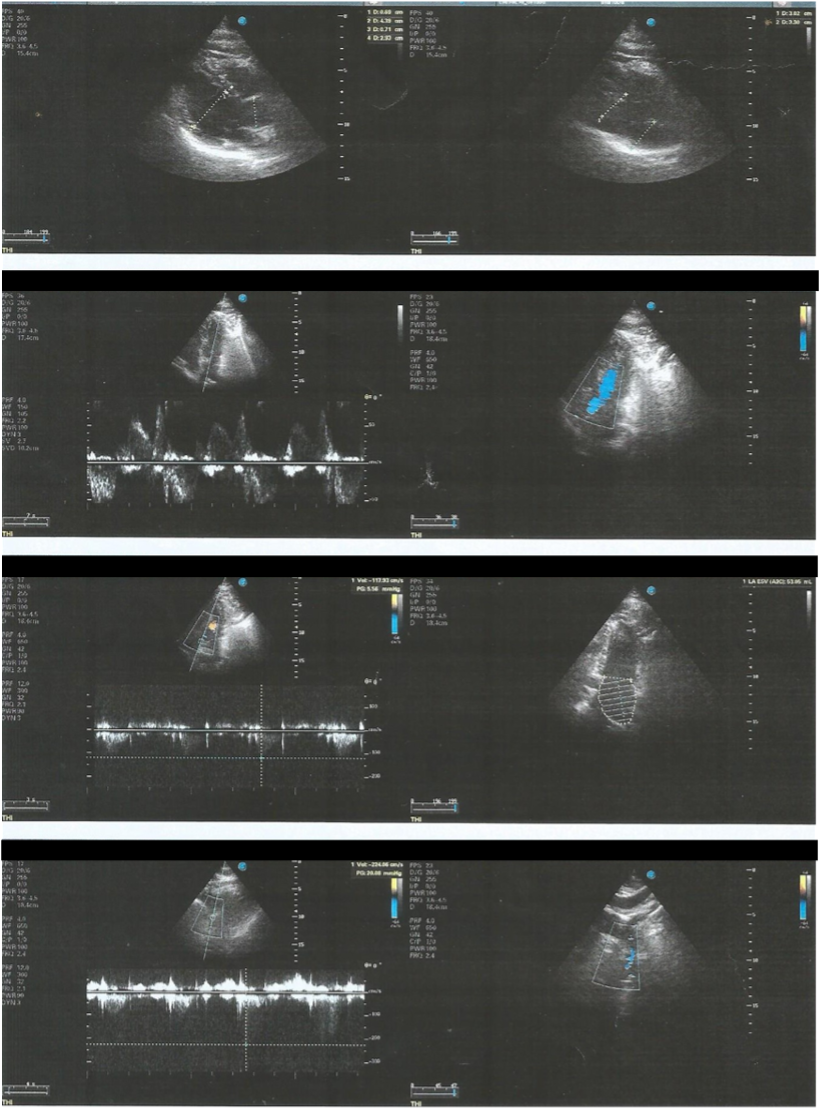
Widened pulse pressure (PP) is a marker of reduced large-artery compliance, most often attributed to age- and diabetes-related arteriosclerosis, but its differential includes aortic regurgitation, hyperthyroidism, arteriovenous fistula, and severe anemia. Antihypertensive drug classes may differentially affect PP, with renin-angiotensin-aldosterone system (RAAS) inhibitors and calcium channel blockers showing greater benefit on its reduction. A 67-year-old woman with hypertension and insulin-dependent diabetes presented with polyuria, dizziness, wide PP (70 mmHg), tachycardia, hyperglycemia, and peripheral edema after prolonged discontinuation of losartan and insulin due to public pharmacy shortages. Aortic regurgitation was excluded by absence of a diastolic murmur and by echocardiography, which showed aortic arch atheromatosis and mild valve calcification without regurgitation. Substitution of carvedilol with olmesartan, alongside correction of hyperglycemia-driven dehydration, was associated with progressive narrowing of PP. This case highlights the clinical rationale for favoring RAAS inhibition over beta-blockade, while emphasizing that medication affordability and supply continuity are as clinically fundamental as pharmacologic choice in resource-limited settings.
Article Details

This work is licensed under a Creative Commons Attribution 4.0 International License.
Authors retain the copyright of their articles and grant the journal the right of first publication under the Creative Commons Attribution (CC BY) license, which allows others to share and adapt the work with proper attribution.
References
Boutouyrie P, Chowienczyk P, Humphrey JD, Mitchell GF. Arterial stiffness and cardiovascular risk in hypertension. Circ Res. 2021;128(7):864-886. doi:10.1161/CIRCRESAHA.121.318061.
Tang KS, Medeiros E, Shah AD. Wide pulse pressure: A clinical review. J Clin Hypertens (Greenwich). 2020;22(11):1960-1967. doi:10.1111/jch.14051.
Chirinos JA, Segers P, Hughes T, Townsend R. Large-artery stiffness in health and disease. J Am Coll Cardiol. 2019;74(9):1237-1263. doi:10.1016/j.jacc.2019.07.012.
Khan NA, Rabkin SW, Zhao Y, McAlister FA, Park JE, Guan M, et al. Effect of lowering diastolic pressure in patients with and without cardiovascular disease. Hypertension. 2018;71(5):840-847. doi:10.1161/HYPERTENSIONAHA.117.10177.
Madan N, Lee AK, Matsushita K, Hoogeveen RC, Ballantyne CM, Selvin E, et al. Relation of isolated systolic hypertension and pulse pressure to high-sensitivity cardiac troponin-T and N-terminal pro-B-type natriuretic peptide in older adults (from the Atherosclerosis Risk in Communities Study). Am J Cardiol. 2019;124(2):245-252. doi:10.1016/j.amjcard.2019.04.030.
Li J, Somers VK, Gao X, Chen Z, Ju J, Lin Q, et al. Evaluation of optimal diastolic blood pressure range among adults with treated systolic blood pressure less than 130 mm Hg. JAMA Netw Open. 2021;4(2):e2037554. doi:10.1001/jamanetworkopen.2020.37554.
Klein I, Ojamaa K. Thyroid hormone and the cardiovascular system. N Engl J Med. 2001;344(7):501-509. doi:10.1056/NEJM200102153440707.
Putowski Z, Teboul JL, Castro R, Chemla D, Oras J, Morales S, et al. Can we reliably use pulse pressure as a surrogate for stroke volume? Physiological background and potential clinical implications for shock resuscitation. Crit Care. 2025;29(1):249. doi:10.1186/s13054-025-05490-9.
Tang KS, Medeiros E, Shah AD. Wide pulse pressure: A clinical review. J Clin Hypertens (Greenwich). 2020;22(11):1960-1967. doi:10.1111/jch.14051.
Neutel JM, Smith DH, Weber MA, Schofield L, Purkayastha D, Gatlin M. Efficacy of combination therapy for systolic blood pressure in patients with severe systolic hypertension: The Systolic Evaluation of Lotrel Efficacy and Comparative Therapies (SELECT) study. J Clin Hypertens (Greenwich). 2005;7(11):641-646. doi:10.1111/j.1524-6175.2005.04615.x.
Schettini IVG, Rios DRA, Figueiredo RC. Effect of different classes of antihypertensive drugs on arterial stiffness. Curr Hype-rtens Rep. 2023;25(5):61-70. doi:10.1007/s11906-023-01238-4.
Cheng Y, Xia J, Li Y, Wang J. Antihypertensive treatment and central arterial hemodynamics: a meta-analysis of randomized controlled trials. Front Physiol. 2021;12:762586. doi:10.3389/fphys.2021.762586.
Wong GW, Boyda HN, Wright JM. Blood pressure lowering efficacy of beta-1 selective beta blockers for primary hyperten-sion. Cochrane Database Syst Rev. 2016;2016(4):CD007451. doi:10.1002/14651858.CD007451.pub2.
Pérez DA, Polo IG, Salvanés FJR, Roncal SB, Sanz PI, Fernández CS. Sustained-release isosorbide mononitrate as adjuvant treatment in isolated systolic hypertension in the elderly. J Hum Hypertens. 2022;36(2):163-170. doi:10.1038/s41371-021-00498-4.