Spinal Intradural Hematoma Following Neuraxial Anesthesia in a Uroseptic Patient: A Case Report and Narrative Review
Article Sidebar
Main Article Content
Abstract
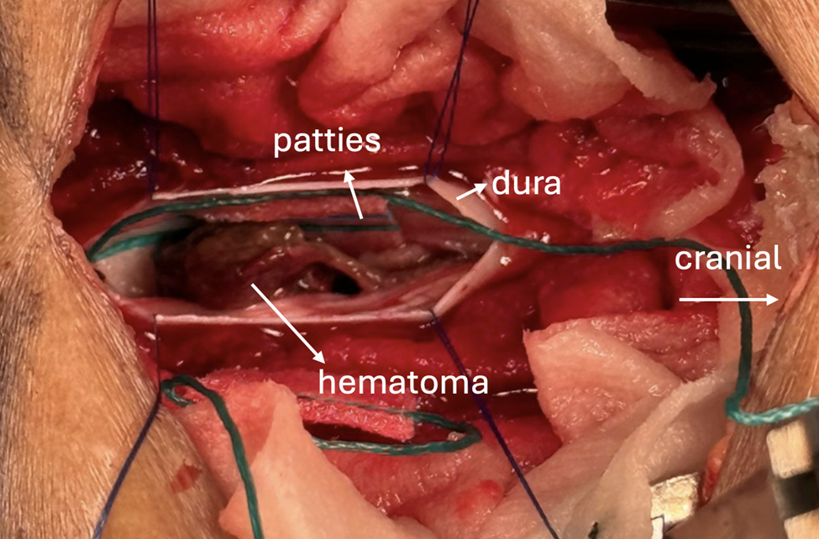
Spinal intradural hematoma (SIH) is a rare but potentially devastating complication of neuraxial anesthesia, particularly in critically ill patients with sepsis-associated thrombocytopenia and coagulation abnormalities. A 63-year-old woman presented with septic shock secondary to obstructive uropathy caused by ESBL-producing Klebsiella pneumoniae. Initial management included intravenous fluid resuscitation, vasopressor support, antimicrobial therapy, and urinary decompression. Following transient hemodynamic stabilization, she underwent urological intervention under spinal anesthesia. Retrospective review demonstrated thrombocytopenia (63 ×10⁹/L) on the day of the procedure, which had not yet been recognized at the time of anesthesia. Within 24 hours, the patient developed acute bilateral lower limb weakness and sensory deficits. Magnetic resonance imaging (MRI) confirmed spinal intradural hematoma at the L2–L3 level with significant neural compression. Emergency decompressive laminectomy was performed; however, neurological recovery remained incomplete. This case highlights the importance of continuous reassessment of coagulation parameters in critically ill septic patients undergoing neuraxial procedures. New neurological deficits following neuraxial anesthesia should be regarded as a medical emergency requiring immediate imaging and urgent neurosurgical evaluation.
Article Details

This work is licensed under a Creative Commons Attribution 4.0 International License.
Authors retain the copyright of their articles and grant the journal the right of first publication under the Creative Commons Attribution (CC BY) license, which allows others to share and adapt the work with proper attribution.
References
Evans L, Rhodes A, Alhazzani W, et al. Surviving sepsis campaign: international guidelines for management of sepsis and septic shock 2021. Intensive Care Med. 2021;47(11):1181–1247.
Kranz J, Schmidt S, Lebert C, et al. The 2024 update of the European Association of Urology guidelines on urological infections. Eur Urol. 2024;85(3):389–398.
Wagenlehner FME, Pilatz A, Weidner W, et al. Urosepsis—from the view of the urologist. Int J Antimicrob Agents. 2011;38(Suppl):51–57.
Bonkat G, Pickard R, Bartoletti R, et al. EAU guidelines on urological infections: 2023 update. Eur Urol Focus. 2023;9(1):10–22.
Levy MM, Evans LE, Rhodes A. The surviving sepsis campaign bundle: 2018 update. Intensive Care Med. 2018;44(6):925–928.
Seymour CW, Gesten F, Prescott HC, et al. Time to treatment and mortality during mandated emergency care for sepsis. N Engl J Med. 2017;376(23):2235–2244.
Kumar A, Roberts D, Wood KE, et al. Duration of hypotension before initiation of effective antimicrobial therapy is the critical determinant of survival in human septic shock. Crit Care Med. 2006;34(6):1589–1596.
Paterson DL, Bonomo RA. Extended-spectrum beta-lactamases: a clinical update. Clin Microbiol Rev. 2005;18(4):657–686.
Rodríguez-Baño J, Navarro MD, Romero L, et al. Bacteremia due to extended-spectrum beta-lactamase-producing Escherichia coli in the community: risk factors and prognosis. Clin Infect Dis. 2004;38(6):831–838.
Schwaber MJ, Carmeli Y. Mortality and delay in effective therapy associated with extended-spectrum beta-lactamase production in Enterobacteriaceae bacteremia: a systematic review and meta-analysis. J Antimicrob Chemother. 2007;60(5):913–920.
Woerther PL, Burdet C, Chachaty E, et al. Trends in human fecal carriage of extended-spectrum beta-lactamases in the com-munity. Clin Microbiol Rev. 2013;26(4):744–758.
van Duin D, Doi Y. The global epidemiology of carbapenemase-producing Enterobacteriaceae. Virulence. 2017;8(4):460–469.
Tamma PD, Aitken SL, Bonomo RA, et al. Infectious Diseases Society of America guidance on the treatment of antimicro-bial-resistant Gram-negative infections. Clin Infect Dis. 2024;78(4):e1–e45.
Tamma PD, Rodríguez-Baño J. The use of non-carbapenem β-lactams for the treatment of ESBL infections. Clin Infect Dis. 2017;64(7):972–980.
Bos EME, Hollmann MW, Lirk P. Hematoma and abscess after neuraxial anesthesia: a review of the literature. Br J Anaesth. 2018;120(4):693–704.
Kietaibl S, Ferrandis R, Godier A, et al. Regional anesthesia in patients on antithrombotic drugs: joint ESAIC/ESRA guidelines. Eur J Anaesthesiol. 2022;39(2):100–132.
Li SL, Wang DX, Ma D, et al. Epidural hematoma after neuraxial blockade: a retrospective review of risk factors and outcomes. J Anesth. 2010;24(3):361–365.
Zhong W, Chen H, You C, et al. Spontaneous spinal epidural hematoma: clinical features and surgical outcomes. J Clin Neurosci. 2011;18(6):800–804.
Bauer ME, Toledano RD, Houle T, et al. Lumbar neuraxial procedures in thrombocytopenic patients across populations: a systematic review and meta-analysis. J Clin Anesth. 2020;61:109666.
Scavone BM, Wong CA. Neuraxial anesthesia and the ubiquitous platelet count question—How low is too low? Anesth Analg. 2021;132(6):1538–1541.
Estcourt LJ. Thrombocytopenia in surgery and neuraxial anesthesia. Semin Thromb Hemost. 2020;46(7):761–771.
Groen RJM, van Alphen HAM. Operative treatment of spontaneous spinal epidural hematomas: a study of factors determining postoperative outcome. Neurosurgery. 1996;39(3):494–508.
Lawton MT, Porter RW, Heiserman JE, et al. Surgical management of spinal epidural hematoma: relationship between surgical timing and neurological outcome. J Neurosurg. 1995;83(1):1–7.